
More Than a Course: What a Week Away at a Sports Camp Really Gives Your Child
When parents book a sports course during the school holidays, the first question is often about the coaching. Who’s teaching? How good are they? Will my child improve?
All important questions — but they only tell part of the story.
A well-run residential sports course should offer far more than technical training. At its best, a week away gives young people space to grow in confidence, independence and self-belief, while still feeling supported, safe and encouraged. The sport is the vehicle — but the impact goes much further.
Confidence that comes from doing
Confidence isn’t taught in a classroom. It grows when young people step slightly outside their comfort zone, try something new and realise they can cope — even thrive. Training sessions, teamwork, match play and shared goals all contribute to a quiet sense of achievement. Whether a child arrives as a committed athlete or simply curious to have a go, structured sport gives them repeated moments of success that build genuine self-belief.
Independence, gently introduced
For many pupils, a residential course is their first experience of time away from home. Within a clear routine — meals, training, rest and activities — they learn to manage their kit, their time and their energy. These are small steps, but powerful ones. The result is often a noticeable boost in maturity and confidence that parents recognise immediately on collection day.
Resilience in a safe environment
Sport naturally involves challenge: fatigue, mistakes, competition and the occasional disappointment. In the right environment, these moments become valuable learning experiences. Children learn how to respond, reset and try again — skills that matter just as much off the pitch as on it. Crucially, this resilience is developed in a setting where encouragement, guidance and care are always close at hand.
Friendships that form quickly — and last
There’s something about shared training sessions, mealtimes and evenings that brings young people together fast. Courses attract pupils from different schools and backgrounds, creating a welcoming mix where friendships form naturally. For many, these social connections are just as important as the sport itself — and often endure long after the course ends.
Serious development, without losing the fun
A common concern for parents is whether a course will be too intense — or not structured enough. The best programmes strike a careful balance: purposeful and individualised coaching, matched to age and ability, combined with enjoyment and variety. Children should feel challenged, but also energised, supported and happy to return the next day.
A holiday with purpose
For parents, there is real reassurance in knowing that school holiday time is being spent well. A sports course offers structure, supervision and positive role models, alongside the freedom and enjoyment young people crave. It’s a break from routine that still feels meaningful — physically, socially and personally.
In the end, a week away at a sports camp isn’t just about better skills or sharper tactics. It’s about returning home a little taller, a little more confident, and with a stronger sense of what young people are capable of achieving — both on the pitch and beyond.
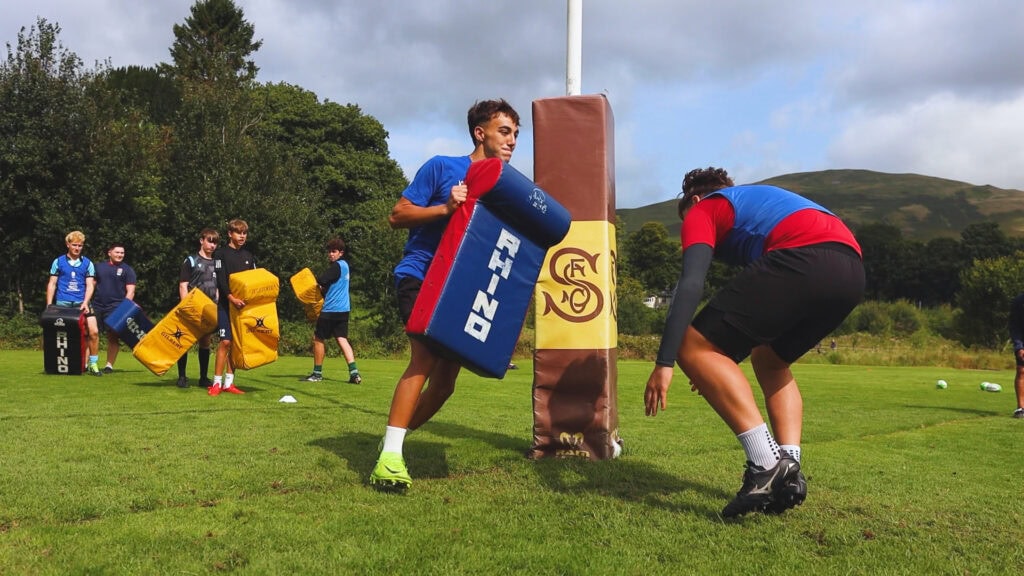
This philosophy underpins every course we run at Sedbergh School during February half term, Easter, Summer and October — welcoming both budding athletes and those simply looking for a fun, confidence-building experience.
